

At TheRemodelers.org we don't sell anything. Instead we provide information that helps our community make decisions regarding home improvement services and projects. Click below for recommended licensed professionals that provide free no obligation quotes.
Roofing: The Complete Homeowner's Guide
Roofing Projects: Costs, Materials, Pros & Cons Guide
TheRemodelers brings together licensed roofing contractors and industry professionals to help homeowners understand roof replacement — what it costs, how long it takes, which materials hold up best, and how to choose a contractor who does the job right the first time.
Most homeowners do not start thinking seriously about roof replacement until something forces them to — a leak after a hard rain, granules showing up in the gutters, an insurance adjuster walking the roof after a storm. By that point the question is no longer whether to replace but what it will cost, how long it takes, and whether the contractor in front of them is being straight with them.
This guide covers everything you need to know before that conversation happens. What roof replacement costs in 2026, what drives that number up or down, which materials perform best in different climates, how to tell when repair is no longer enough, what to expect on installation day, and what to look for in a contractor. The goal is to give you enough information to make a confident decision before anyone is standing on your roof.
What Roof Replacement Costs in 2026
The cost of roof replacement varies more than most homeowners expect because the range of materials, roof sizes, and contractor quality in this category is wide.
For a standard asphalt shingle roof on a typical American home, expect to pay:
Home Size | Cost Range |
|---|---|
Small home under 1,500 sq ft | $5,000 to $8,500 |
Medium home 1,500 to 2,500 sq ft | $8,500 to $14,000 |
Large home 2,500 to 3,500 sq ft | $13,000 to $20,000 |
Very large home over 3,500 sq ft | $18,000 to $30,000+ |
These ranges assume architectural asphalt shingles — the most common residential roofing material — with standard removal of one existing layer. Premium materials, steep pitches, and complex roof geometry push cost significantly higher.
Roofing is priced per square, where one square equals 100 square feet of roof surface. Understanding this unit makes it easier to compare quotes from different contractors on equal terms.
What Drives Roof Replacement Cost Up or Down
Two homes of identical size can produce quotes that differ by thousands of dollars. Here is what is actually moving that number.
Roof size is the primary driver. More square footage means more material and more labor time. This one is straightforward.
Roof pitch matters significantly. A low-slope roof that workers can walk on easily is the least expensive to labor. Steeper pitches require harnesses, scaffolding, and slower careful work — all of which add labor cost. A roof with a 12-in-12 pitch costs meaningfully more to reroof than one with a 4-in-12 pitch of the same square footage.
Roof complexity drives cost up. A simple gable roof with two planes is the most efficient to reroof. Every valley, dormer, skylight, chimney, and penetration adds labor time for flashing work and material cuts. A complex roof can cost 20 to 40 percent more per square than a simple one.
Tear-off layers add cost. Most jobs involve removing one layer of old shingles. If a second layer is already present — some homes have had two reroof cycles — removing both adds significant labor and disposal cost. In many jurisdictions three layers are not permitted by code regardless.
Material choice changes the number considerably. Architectural shingles are the standard baseline. Metal, tile, and premium shingle products cost more — sometimes significantly more — and that cost difference is explored in the materials section below.
Geographic location affects labor rates. Roofing labor in the Northeast and on the West Coast runs higher than in the Midwest and South. Regional material availability also affects pricing in some markets.
Roofing Materials: What Your Options Actually Are
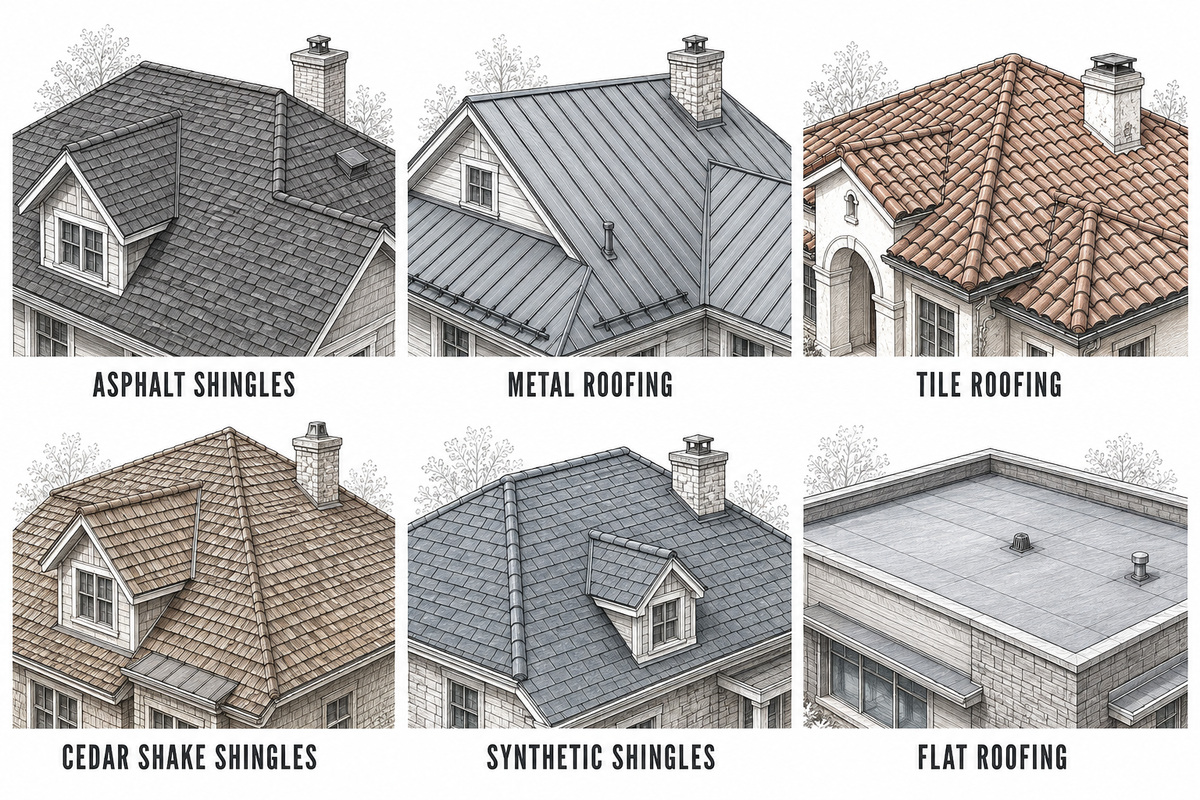
The material you choose affects upfront cost, lifespan, maintenance requirements, and how the roof performs in your specific climate. Here is an honest look at each option.
Architectural Asphalt Shingles
Architectural shingles — also called dimensional or laminate shingles — are the most widely installed residential roofing material in the US. They cost less than most alternatives, are available in a wide range of colors and profiles, and are installed by the largest pool of qualified contractors.
A quality architectural shingle roof lasts 25 to 30 years when installed correctly with proper ventilation. They carry manufacturer warranties from 30 years to lifetime on premium products, though the warranty specifics matter — read what the warranty actually covers before putting weight on it.
The comparison between 3-tab and architectural shingles covers how these two shingle categories differ in cost, appearance, and performance.
Metal Roofing
Metal roofing has moved steadily into the residential market over the past decade. Standing seam steel and aluminum roofs carry lifespan estimates of 40 to 70 years and perform well in high-wind, heavy-snow, and wildfire-risk environments.
The upfront cost is significantly higher than asphalt — typically two to four times the cost per square depending on the metal system. The longer lifespan changes the math on cost per year of service, but the higher initial outlay is real and needs to fit the budget.
Metal roofing installation requires a contractor with specific metal roofing experience. It is not interchangeable with asphalt shingle installation skill. The full comparison of metal roofing vs shingles covers where each material wins and where it does not. If you are weighing the decision, 7 reasons homeowners buy metal roofs and 11 reasons not to buy a metal roof both give you the honest case for each side.
Tile Roofing
Clay and concrete tile roofs are the premium option in both cost and longevity. A properly installed tile roof can last 50 years or more. The tile material itself is extremely durable — what typically limits the system is the underlayment beneath the tiles, which is rated for 20 to 30 years and requires replacement when it reaches end of life while the tiles remain sound.
Tile requires a structural assessment before installation. The weight of clay and concrete tile is significantly greater than asphalt or metal, and not every home can support it without framing reinforcement.
Cost runs roughly $18 to $30 per square foot installed depending on tile type, roof complexity, and regional labor rates. The complete tile roofing guide covers what homeowners need to know before choosing tile.
Cedar Shake Shingles
Cedar shake roofing brings a natural, textured look that no other material fully replicates, which is why it remains popular on craftsman, cottage, and rustic-style homes despite higher maintenance requirements than asphalt or metal.
Properly treated and maintained cedar shake lasts 30 to 40 years, though that lifespan depends heavily on climate and upkeep. Cedar performs best in drier climates; in humid or heavily wooded areas, it requires more frequent treatment against moss, algae, and rot.
Cost runs higher than architectural asphalt shingles and is generally comparable to or above standard metal roofing, reflecting both material cost and the specialized installation skill cedar shake requires. The cedar shake roofing guide covers cost, maintenance, and climate considerations in more detail.
Synthetic Shingles
Synthetic shingles, sometimes called composite shingles, are engineered to mimic the look of cedar shake or slate at a fraction of the weight and with significantly less maintenance than either natural material.
Because synthetic shingles are manufactured rather than quarried or milled, they perform more consistently across climates than cedar or tile, resisting moisture, impact, and UV degradation without the upkeep natural materials require. Many synthetic products carry 40-to-50-year warranties.
Cost typically falls between architectural asphalt and real cedar shake, making synthetic a middle-ground option for homeowners who want the shake or slate look without the maintenance commitment or the structural weight concerns tile requires. The synthetic roofing cost guide breaks down pricing by product tier.
Flat and Low-Slope Roofing
Not every roof is pitched. Additions, garages, porches, and some full home designs use flat or low-slope roofing, which requires an entirely different material approach than steep-slope shingles, metal, or tile.
EPDM (rubber membrane) and TPO (a heat-welded synthetic membrane) are the two most common flat roofing materials on residential low-slope sections today. Both are installed in large sheets rather than overlapping units, which changes both the installation process and the failure points to watch for.
Drainage is the single biggest factor in how long a flat roof lasts, since standing water is the primary cause of premature failure on any low-slope system. Our EPDM vs TPO comparison and flat roof drainage systems guide cover material selection and drainage design in more detail.
Cost by Roof Size: What Real Numbers Look Like
To make cost estimates more concrete, here is what each material typically costs across common home sizes. All figures include tear-off of one existing layer and standard installation.
Home Size | Architectural Shingles | Metal (Standing Seam) | Tile |
|---|---|---|---|
Small (~1,200 sq ft roof) | $5,500 – $8,000 | $14,000 – $20,000 | $21,000 – $32,000 |
Medium (~2,000 sq ft roof) | $9,000 – $14,000 | $22,000 – $34,000 | $36,000 – $54,000 |
Large (~3,000 sq ft roof) | $13,000 – $20,000 | $34,000 – $50,000 | $54,000 – $80,000 |
These are ranges, not quotes. Your actual cost depends on the specific variables covered above. Getting three detailed quotes from licensed contractors in your area is the only way to know your real number.
Regional Cost Differences
Where your home is located affects what you pay for roof replacement, sometimes significantly. Labor is the main variable — roofing crews in high cost-of-living markets earn more, and that difference flows directly into your quote.
The Northeast and Pacific Coast consistently come in above national average. The Midwest and Southeast tend to run below. Mountain states vary depending on whether you are in a metro area or a rural market.
Material availability matters in some regions too. In markets where tile is uncommon, fewer contractors install it and those who do may charge a premium for specialty work. Metal roofing installation pricing varies more by region than asphalt because the installer pool is smaller. Our regional roofing cost guide and this Los Angeles-specific pricing breakdown show how these differences play out in real markets.
A quote that seems unusually low for your area warrants investigation — it typically means something is being cut from the scope, the material is lower quality than quoted, or the contractor is underinsured.
Roof Repair vs. Replacement: How to Decide
Not every roofing problem requires a full replacement. Understanding when repair is the right call and when it is just delaying the inevitable saves money and frustration.
Repair makes sense when the damage is isolated — a few missing or cracked shingles, a flashing leak at a chimney or vent pipe, a small area of storm damage. When the rest of the roof is in sound condition with meaningful life remaining, targeted repair is cost-effective. Our roof repair cost guide breaks down typical pricing by repair type, and how to replace a damaged shingle covers what minor shingle repair involves. If the damage extends to the deck itself, our roof decking repair cost guide covers that separately, since it's priced differently than surface-level shingle repair.
Replacement makes more sense when the roof is approaching or past its expected lifespan, when damage is widespread across multiple areas, when granule loss is significant and accelerating, when the decking shows signs of rot or moisture damage, or when a repair would address symptoms without fixing the underlying problem.
The signs it is time for roof replacement and these 5 signs your roof needs replacing give you the specific indicators that tell you repair is no longer the right answer. Once you've made the decision, how long a roof replacement actually takes is usually the next practical question.
Insurance and Storm Damage: What Homeowners Need to Know
Storm damage is one of the most common reasons homeowners replace a roof before it reaches end of natural life. Understanding how the insurance process works before you need it prevents costly mistakes.
After a significant storm — hail, high winds, falling debris — inspect your roof from the ground if you can do so safely. Look for missing shingles, visible damage to ridge caps, and granules collecting in downspouts or gutters. Granule loss after hail is sometimes invisible from the ground but significant — a contractor inspection after major hail events is worth doing even if nothing is visually obvious.
If damage appears present, contact your insurance company to open a claim before authorizing any repair work. The adjuster will inspect the roof and determine whether the damage is covered and how much the insurer will pay. Getting your own contractor inspection before the adjuster visit gives you documentation to support your claim.
Watch for storm chasers — contractors who appear in neighborhoods immediately after storms offering to file your claim for you. A legitimate contractor assesses damage and gives you an estimate. The claim process is between you and your insurer. Any contractor who pressures you to sign an assignment of benefits form before your claim is approved is a significant red flag.
Our hail damage roof inspection guide covers what to look for after severe weather in more detail.
What Happens on Installation Day
Knowing what to expect during a roof replacement helps you prepare and gives you a reference for evaluating the crew's work. For a more detailed, phase-by-phase walkthrough of a real job from tear-off to cleanup, see our roof replacement process guide.
A crew typically arrives early — most roofing work starts at first light to maximize productive hours before afternoon heat. The first task is protecting your property: tarps go down around the perimeter, gutters get covered or protected, and landscaping near the house gets shielded from falling debris and nails.
Tear-off comes next. The old shingles, underlayment, and in some cases starter strips are removed entirely. This is the noisiest phase of the job. The crew should inspect the decking as it is exposed — any rotted or soft sections get replaced before new material goes down. This is an add-on cost if it comes up but it is necessary work.
After tear-off, new underlayment goes down across the entire deck. Ice and water shield — a self-adhering membrane — goes in the valleys, along eaves, and around penetrations. Felt or synthetic underlayment covers the field of the roof. Our underlayment types comparison covers the tradeoffs between these materials, and the fastener choice — cap nails vs. staples — affects how well that underlayment stays in place during a storm.
Shingles begin at the eaves and work up. Flashing around chimneys, vents, skylights, and valleys gets installed as the crew reaches each area. Ridge cap goes on last.
A full replacement on an average home typically takes one to two days for a standard crew. Cleanup should be thorough — the crew runs a magnetic roller across the yard and driveway to pick up nails. Inspect the perimeter before they leave and check gutters for nails and debris.
Post-Replacement Maintenance: Extending the Life of a New Roof
A new roof is not maintenance-free. A few simple practices extend its life and protect your investment — our roof maintenance checklist covers a full seasonal routine if you want the complete version.
Inspect the roof annually — walk the perimeter and look at the roof surface from the ground. You are looking for lifted or missing shingles, granule loss visible in the gutters, and any debris accumulation in valleys. After major storms, do a specific check regardless of where you are in the annual cycle.
Keep gutters clear. Clogged gutters back water up under the eaves and accelerate deterioration of the lower shingle courses and the decking beneath them. Why gutters matter covers the connection between gutter function and roof health in more detail.
Trim overhanging branches. Branches that rest on or scrape against the roof accelerate granule loss and create pathways for moisture and debris accumulation. Keep tree limbs at least six feet clear of the roof surface.
Address moss and algae early. Moss holds moisture against the shingle surface and accelerates breakdown. Zinc or copper strips installed at the ridge release trace amounts of metal when it rains, inhibiting moss and algae growth across the roof surface below. If growth is already present, a professional application of appropriate treatment prevents further spread without the physical scrubbing that damages shingles.
Keep attic ventilation clear. Proper attic ventilation is part of what makes a shingle roof last. Blocked soffit vents or insufficient ridge ventilation cause heat and moisture buildup in the attic that shortens shingle life from below. Our roof ventilation types guide and ventilation cost breakdown cover how to assess and fix ventilation issues. This is worth checking if you are seeing premature granule loss on a relatively new roof.
How to Choose a Roofing Contractor
The material you choose matters. The installation determines whether it performs as advertised. A well-manufactured shingle installed on improper underlayment, with flashing done carelessly, will fail before its time regardless of the manufacturer's warranty.
Ask for a license and proof of insurance before anything else. Roofing work involves real liability — an uninsured crew working on your home means you absorb the risk if someone is injured or your property is damaged.
Ask whether they use their own crews or subcontract. A company that installs with its own trained employees on every job is a different proposition than one that hires whoever is available. The quality of flashing work in particular — the most technically demanding part of any roofing installation — depends on skill that does not transfer with a different subcontractor each job.
Ask about their warranty — the manufacturer's material warranty and the contractor's installation labor warranty. These are separate things. A contractor who backs their installation with a labor warranty is telling you something about their confidence in the work they do.
Ask for references from jobs completed in the past year and follow up on them. Roofing quality is visible from the street — ask if you can drive by a completed job before you sign anything.
Get at least three written quotes. Compare them on scope, not just price. A quote that does not specify underlayment type, shingle product and warranty class, and what happens if damaged decking is found is not a complete quote. You cannot compare price if the scopes are different. Our guide to comparing roofing estimates and evaluating roof costs with a home inspector can help you spot the differences that matter.
Watch for red flags: pressure to sign today, demands for large upfront deposits, no written contract, or unwillingness to provide license and insurance documentation. Trust your instincts if something feels rushed or pressured — a legitimate contractor won't need to close the deal on the first visit.
Final Thoughts
Roof replacement is one of the larger purchases most homeowners make, and the decisions that matter most — material choice, contractor quality, and timing — are all things you can evaluate carefully before anyone climbs on your roof.
The homeowners who get the best outcomes are the ones who understand what the job actually involves before the first contractor arrives. The cost ranges, material comparisons, and contractor guidance covered here are designed to give you that foundation.
When you are ready to get estimates from licensed roofing contractors in your area, Home Upgrade Pros connects you with professionals who offer free no-obligation assessments. Call (702) 620-6514 to speak with a local roofing contractor directly.
Roofing Projects from Our Experts

Aug
20
What Is the Roof Replacement Process? Step-by-Step Guide for Homeowners
What Happens During a Roof Replacement: 6 Key PhasesA full roof replacement is one of the largest and most important exterior...

Aug
20
Cap Nails vs Staples Roofing: The Fastener Decision That Protects Your Roof in a Storm
Cap Nails vs. Staples: Which Protects Your Roof Better?The fasteners that hold down the roof underlayment are the kind of...
Roofing Ideas and Inspiration

Aug
20
Green Roof and Living Roof Systems Guide: Costs and What to Know
Green Roof Cost Guide: What a Living Roof Really InvolvesA green roof, also called a living roof, replaces the exposed membrane...

Aug
20
Roof Snow Load and Ice Management Guide: Weight, Risk, and Prevention
Roof Snow Load and Ice Dams: What Homeowners Should KnowSnow looks light and harmless from a window, but it is one of the...
How much does roof replacement cost?
For a standard architectural shingle roof, expect $5,000 to $8,500 for a small home, $8,500 to $14,000 for a medium home, and $13,000 to $20,000 for a large home. Metal and tile roofing cost significantly more. Final cost depends on roof size, pitch, complexity, material choice, and regional labor rates.
How long does a new roof last?
Architectural asphalt shingles last 25 to 30 years when properly installed and maintained. Metal roofing lasts 40 to 70 years depending on the system. Clay and concrete tile roofs can last 50 years or more, though the underlayment beneath them typically requires replacement at the 20 to 30 year mark.
How do I know if I need a new roof or just repairs?
Repair is appropriate for isolated damage when the rest of the roof has meaningful life remaining. Replacement makes sense when the roof is near or past its expected lifespan, granule loss is widespread, decking shows moisture damage, or repairs would address symptoms without fixing the underlying problem.
What is the best roofing material?
For most homeowners, architectural asphalt shingles offer the best combination of cost, performance, and installer availability. Metal roofing is the better long-term investment for homeowners planning to stay in the home for 30 or more years and willing to pay the higher upfront cost. Tile is the premium option in durability and appearance for homes that can support the weight.
How long does roof replacement take?
A full replacement on an average home takes one to two days for a standard crew. Larger homes, complex roof geometry, or projects requiring significant decking repair may run longer. Most residential reroofs are completed within a single work day.
Will homeowners insurance cover roof replacement?
Insurance typically covers replacement when the damage is caused by a covered peril — storm, hail, wind, fire. Damage from age, wear, and lack of maintenance is generally not covered. After significant storm events, a contractor inspection before the adjuster visit gives you documentation to support your claim. Avoid any contractor who pressures you to sign an assignment of benefits before your claim is approved.
What questions should I ask a roofing contractor?
Ask for license and proof of insurance. Ask whether they use their own crews or subcontract. Ask what underlayment they use and why. Ask about both the manufacturer warranty and their own installation labor warranty. Ask for references from recent completed jobs. Get at least three written quotes that specify material, scope, and what happens if damaged decking is discovered. Compare scope before comparing price.