

At TheRemodelers.org we don't sell anything. Instead we provide information that helps our community make decisions regarding home improvement services and projects. Click below for recommended licensed professionals that provide free no obligation quotes.
Windows: The Complete Homeowner's Guide
Window Replacement Guide: What Homeowners Should Know Before They Start
TheRemodelers brings together licensed window contractors and industry professionals to help homeowners understand window replacement — what it costs, how long it takes, which materials perform best, and how to choose a contractor who installs correctly the first time.
Most homeowners start thinking about window replacement when something obvious forces them to — a broken seal, a draft they cannot eliminate, a window that will not open or close properly anymore. By that point the question is no longer whether to replace but what it will cost, how long it will take, and whether the salesperson in front of them is being straight with them.
This guide covers everything you need to know before that conversation. What replacement windows cost, what drives that number up or down, which frame materials hold up best, how to tell when repair is no longer enough, what to expect during installation, and what to look for in a contractor. The goal is to give you enough information to make a confident decision before anyone tries to make it for you.
What Window Replacement Costs in 2026
The cost of window replacement varies more than most homeowners expect because the range of products, installation complexity, and contractor quality in this category is enormous.
A single double-hung replacement window installed typically runs $400 to $1,000 including labor for a standard size in a standard opening. Premium windows, larger sizes, or windows requiring structural modification run significantly higher.
For a full home replacement — the most common project — expect to pay:
A small home with 8 to 10 windows: $4,000 to $10,000. A medium home with 10 to 15 windows: $8,000 to $16,000. A larger home with 15 to 20 or more windows: $14,000 to $30,000.
These ranges assume standard replacement windows in existing openings with no structural changes. Custom sizes, non-standard shapes, or windows requiring new framing cost more.
The full breakdown of what new windows really cost covers the cost variables in more detail including how to compare quotes from different contractors on equal terms.
What Drives Window Replacement Cost Up or Down
Two homes with the same number of windows can produce quotes that differ by thousands of dollars. Here is what is actually moving that number.
Window size matters directly. Larger windows cost more in both materials and labor. Bay windows, bow windows, and picture windows cost significantly more than standard double-hung or casement windows of similar square footage.
Frame material changes the price meaningfully. Vinyl is the most affordable option and the most common. Fiberglass costs more but outperforms vinyl in dimensional stability and longevity. Wood and wood-clad windows are the premium option in both cost and appearance. Aluminum sits between vinyl and fiberglass in most markets.
Glass package affects cost significantly. A standard double-pane Low-E window is the baseline. Triple-pane glass adds cost but improves thermal performance meaningfully in cold climates. Laminated glass for sound reduction costs more than standard. Specialty coatings, decorative glass, and divided light patterns all add to the unit cost.
Installation complexity drives labor cost. A window in a standard opening with no rot, no structural issues, and straightforward access is the least expensive to install. A window on a second or third floor, one requiring scaffold or lift equipment, or one in an opening with rotted framing adds labor time and material cost.
Whether you need standard replacement windows or new-construction windows also affects both cost and installation method — our replacement vs. new construction windows comparison covers how these two approaches differ and when each applies.
Number of windows affects unit price. A contractor replacing 15 windows in one project will typically offer a lower per-window price than replacing 3. Bundling replacements into a single project when multiple windows need attention saves money per unit.
Window Frame Materials: What Your Options Actually Are
The frame material you choose affects cost, maintenance requirements, energy performance, and how long the windows last. Here is an honest look at each option.
Vinyl
Vinyl is the most widely installed replacement window frame material in the US. It is affordable, requires no painting or staining, does not rot, and performs well thermally because the material does not conduct heat or cold the way aluminum does.
The limitations of vinyl are dimensional stability and appearance. Vinyl expands and contracts with temperature changes more than fiberglass or wood, which can affect seal integrity over time in climates with extreme temperature swings. In terms of appearance, vinyl does not look like wood and cannot be painted if you want to change the color later.
For most homeowners replacing windows in a standard residential setting, vinyl offers the best combination of cost, performance, and low maintenance.
Fiberglass
Fiberglass windows cost 20 to 40 percent more than vinyl but offer better dimensional stability, longer lifespan, and the ability to be painted. They expand and contract at nearly the same rate as glass, which helps maintain the seal between frame and glass over decades.
For homeowners planning to stay in the home long term and wanting a product that performs at a higher level over time, fiberglass is worth the premium. The comparison of window materials covers how the main options stack up in more detail.
Wood and Wood-Clad
Wood windows are the traditional choice and still the preference for historically accurate renovations or homes where interior wood appearance matters. They can be painted or stained to match any interior and perform well thermally.
The maintenance requirement is the tradeoff. Unprotected exterior wood requires periodic painting or staining to prevent rot. Wood-clad windows address this by wrapping the exterior in aluminum or fiberglass while keeping a wood interior — giving you lower exterior maintenance with a wood interior finish.
Wood and wood-clad windows cost significantly more than vinyl and require a contractor experienced with their installation and finishing requirements.
Aluminum
Aluminum windows are common in commercial construction and in warmer climates where thermal performance is less critical. They are strong, slim-profiled, and hold up well. The limitation is thermal conductivity — aluminum transfers heat and cold readily, which reduces energy efficiency in climates with meaningful winter temperatures. Thermally broken aluminum frames address this somewhat but at higher cost.
Window Types: Which Style Fits Your Home
Beyond frame material, the operating style of the window affects both cost and function. The most common types are:
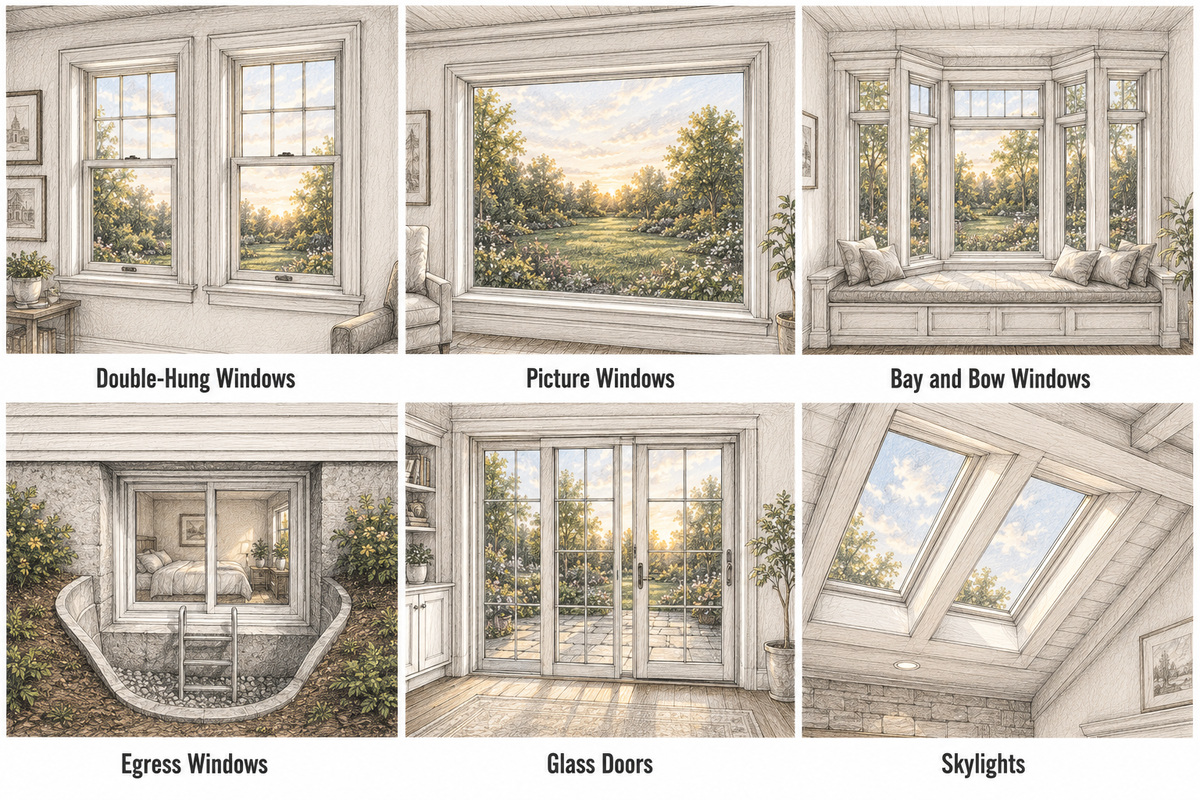
Double-hung windows — the most common style in US homes. Both sashes move up and down. Easy to clean from inside. The standard choice for most replacement projects. Casement windows — hinged on one side and cranked open outward. Provide a tighter seal when closed than double-hung. Better for ventilation in some configurations. Sliding windows — one sash slides horizontally. Common in contemporary homes and ranch-style construction. See our full comparison of these three operating styles for a closer look at which fits your home.
Picture windows — fixed, non-opening. Used for views and light where ventilation is not needed. Less expensive per square foot than operating windows.
Bay and bow windows — project outward from the wall and add interior space and exterior character. Significantly more expensive than standard windows due to structural requirements.
Egress windows — a code-required category rather than a style choice. Basements and bedrooms generally must have a window large enough for emergency exit, which affects both the size and type of window that can be installed in those rooms and is worth understanding before you assume any window will work in a below-grade renovation.
Sliding glass and patio doors are technically doors rather than windows, but they're glazed openings priced and installed by the same contractors, and homeowners often weigh them alongside a window project. See our sliding patio door FAQ for the questions homeowners ask most.
Skylights are a roof-mounted option worth considering for rooms that can't gain more wall-mounted window area, particularly bathrooms, stairwells, and interior rooms with no exterior wall access.
The guide to different types of home windows covers each style in more detail including which configurations work best in different rooms.
When to Repair vs. Replace
Not every window problem requires full replacement. Understanding when repair is the right call and when it is just delaying the inevitable saves money and frustration.
Repair is appropriate when the problem is isolated — a broken hardware piece, a failed weatherstrip, a single broken pane in an otherwise sound window. Hardware replacement and weatherstripping are inexpensive fixes that restore function without replacing the unit.
Replacement makes more sense when the frame itself is damaged or rotted, when the seal between panes has failed on multiple windows producing condensation between the glass, when the windows are so old that parts are no longer available, or when energy loss is a consistent problem across the whole house.
Our guide to repairing vs. replacing your windows covers the specific indicators that tell you repair is no longer the right answer in more detail.
Energy Efficiency: What Actually Makes a Difference
Energy efficiency is the most commonly cited reason for window replacement and the one most subject to overselling. Here is what the data actually shows.
The glass package matters more than most homeowners realize. A double-pane Low-E window with argon gas fill is the baseline for energy efficiency in most US climates. Low-E coatings reflect infrared radiation, reducing heat transfer in both directions — keeping heat in during winter and out during summer. Our guide to window glass, Low-E, and argon covers what these terms actually mean on a spec sheet.
Triple-pane glass adds a meaningful improvement in cold climates where heating costs are high. In mild climates the payback period for the additional cost is longer. Our triple-pane vs. double-pane comparison breaks down the cost and performance difference in more detail.
Frame material affects thermal performance at the edges. Vinyl and fiberglass outperform aluminum significantly. The NFRC label on the window tells you the U-factor (heat loss rate) and Solar Heat Gain Coefficient — the two numbers that matter most for energy comparison between products.
New windows may also qualify for a federal tax credit — our window energy tax credit guide covers current eligibility requirements and how much homeowners can typically claim.
The guide to energy efficient windows covers what the performance numbers actually mean and what to look for when comparing products.
What Happens During Window Installation
Knowing what to expect on installation day helps you prepare and gives you a reference for evaluating the crew's work.
A standard replacement window installation does not require removing interior or exterior trim in most cases. The new window inserts into the existing frame opening, is shimmed level and plumb, fastened, and sealed. A single window takes 30 to 60 minutes for an experienced crew. A full home of 12 to 15 windows is typically completed in one day. Our step-by-step window removal and installation walkthrough and our comparison of inside vs. outside installation technique cover the process in more detail.
The crew should protect interior surfaces below each window during installation and clean up thoroughly before leaving. Inspect each window before the crew leaves — check that it opens and closes smoothly, latches securely, and that the seal between the window and the surrounding trim is complete.
The detailed guide to how long window installation takes covers what affects the timeline and what to expect at each stage.
What to Look for When Choosing a Window Contractor
The window you choose matters. The installation determines whether it performs as advertised. A well-manufactured window installed carelessly — not shimmed level, not properly sealed, flashing done wrong — will leak air and water regardless of its specifications.
Ask for a license and proof of insurance before anything else. Window installation involving structural modification requires a licensed contractor in most jurisdictions.
Ask whether they install the windows themselves or subcontract. A company that uses its own trained crews on every job is a different proposition than one that subcontracts to whoever is available that week.
Ask about their warranty — both the manufacturer's product warranty and the contractor's installation warranty. A contractor who backs their installation work with a separate labor warranty is telling you something about their confidence in the work they do.
Ask for references from recent jobs and follow up on them. Window installation quality is visible from the outside — ask if you can drive by a completed job and look at the exterior finish and flashing detail.
Watch for high-pressure sales tactics. A contractor who tells you the price is only good today or pushes for a deposit before you have reviewed a written contract in full is showing you how they operate.
Our guide to hiring the right window contractor covers additional questions worth asking before you sign anything.
Final Thoughts
Window replacement is one of the more straightforward home improvement projects when the product is right for the home and the installation is done correctly. The decisions that matter most — frame material, glass package, and contractor quality — are all things you can evaluate before signing anything.
The homeowners who get the best results are the ones who take the time to understand what they are buying before the salesperson arrives. The cost ranges, material comparisons, and contractor guidance covered here are designed to give you that foundation.
When you are ready to get estimates from licensed window contractors in your area, Home Upgrade Pros connects you with professionals who offer free no-obligation assessments. Call (725) 313-0738 to speak with a local window contractor directly.
Projects from Our Experts

Aug
20
Triple Pane vs Double Pane Windows: Cost, Energy Savings, and Performance Guide
Triple or Double: Which Is Right for You?When replacing residential windows, one of the most significant decisions homeowners...

Aug
20
Foggy Window Glass Replacement vs New Window Installation: A Contractor's Guide
Foggy Window Glass: Repair or Replace the Whole Window?When double-pane or triple-pane windows begin to look foggy, hazy, or...
Ideas and Inspiration

Aug
20
How Much Does Residential Window Tinting Really Cost?
Window Tinting Cost: What Homeowners Pay in 2026Window film has moved well beyond the dark, mirrored look most people associate...

Aug
20
What Are Transom Windows, and Are They Worth Adding?
Transom Windows: Cost, Styles, and Where They Work BestTransom windows have quietly become one of the more requested details in...