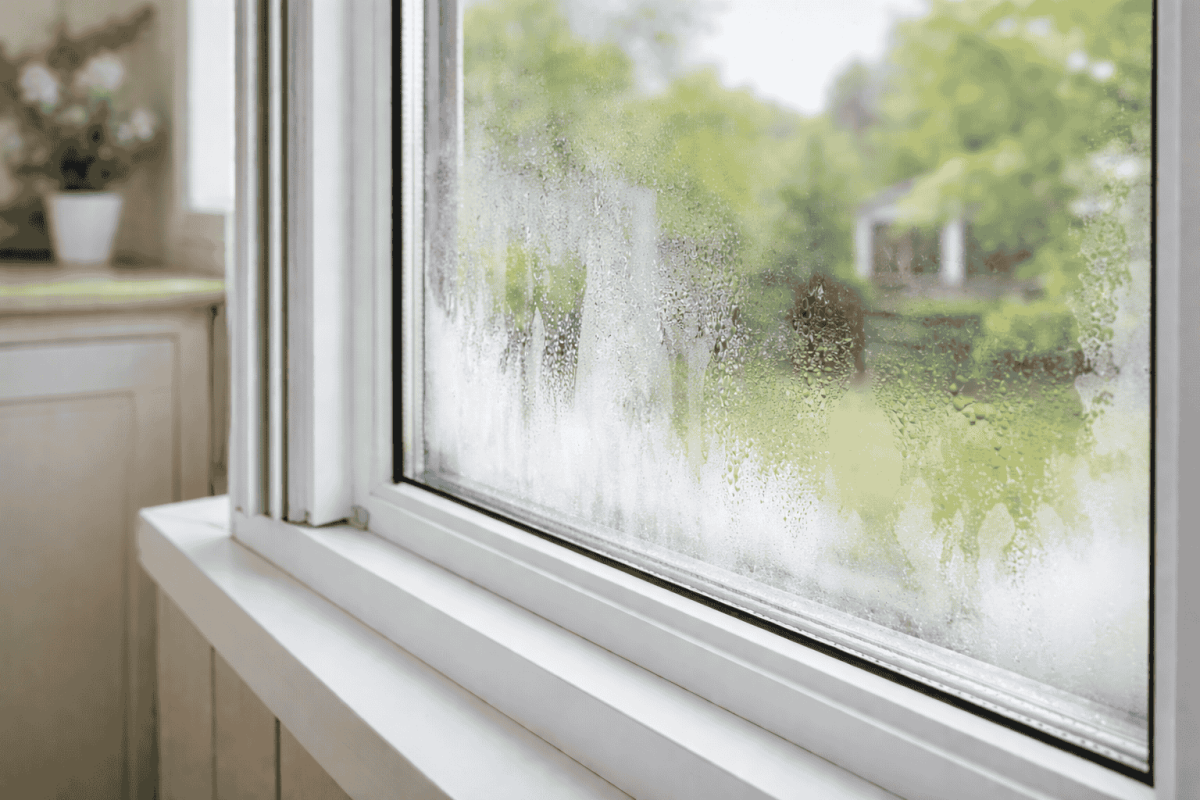
Fog Between Window Panes: What It Means
When a window looks cloudy but won’t wipe clean
You walk past a window on a cool morning and notice something odd. The glass looks cloudy, but wiping the inside does nothing. Cleaning the outside doesn’t help either. Look closer and the fog sits between the panes of glass. It might show up as a light haze, streaks of moisture, or small droplets trapped inside the window. Sometimes it appears only in the morning. Other times it lingers all day.
Many homeowners first assume it’s just humidity or temperature changes. In reality, fog between window panes usually reveals something about the condition of the window itself.
The small clues homeowners usually notice first
Condensation between double-pane windows usually starts with small clues. Homeowners often report things like:
Windows that look cloudy even after cleaning
Moisture or droplets trapped inside the glass
Fog that appears in the morning and fades later
A window that always looks hazy compared to others
Slight streaks or mineral residue inside the pane
Because the moisture sits inside the glass unit, it can’t be wiped away.
That’s usually the first hint something inside the window has changed.
Why moisture can end up between the panes
Most modern homes use double-pane or insulated glass windows. Instead of one sheet of glass, these windows contain two panes sealed together with a spacer between them.
That sealed space often contains air or an insulating gas like argon. The design helps slow heat transfer through the glass.
The key part of this system is the window seal around the edge of the glass unit. That seal keeps outside air and moisture from entering the space between the panes.
When the seal weakens or fails, outside moisture can slowly seep inside. Once moisture gets trapped between the panes, condensation forms when temperatures shift.
That’s when homeowners begin seeing fog or droplets inside the window.
Why insulated windows became the standard
Double-pane windows became common because they improve several everyday aspects of a home.
When seals are intact, these windows can provide:
Better insulation compared to single-pane glass
More stable indoor temperatures near windows
Reduced heating and cooling loss
Less outside noise entering the home
Lower condensation on interior glass surfaces
In short, insulated windows help homes stay comfortable while reducing energy loss.
That’s why a failed seal tends to stand out. The window isn’t performing the way it once did.
When homeowners start paying attention to foggy windows
Not every foggy window means immediate replacement. But there are situations where homeowners begin paying closer attention.
Common signals include:
Condensation that appears inside the glass unit, not on the surface
Fog that returns repeatedly after weather changes
Multiple windows in the home showing similar haze
Drafty areas around older windows
Higher heating or cooling costs without another clear cause
Homes built 15 to 25 years ago sometimes begin seeing seal failures simply due to age. Sun exposure, seasonal expansion, and everyday weather cycles gradually wear down window seals over time.
What homeowners should think about before fixing it
If fog between window panes appears, homeowners typically have a few options depending on the condition of the window.
Some windows allow glass unit replacement. In that case, the sealed pane assembly can be swapped out without replacing the entire frame.
In other situations, full window replacement makes more sense. This often happens when:
The frame is aging or damaged
Multiple windows are failing at once
Energy efficiency improvements are desired
Climate also plays a role. In humid regions like Florida, moisture infiltration can show up faster once seals weaken.
Installation quality matters as well. Poor installation can shorten the life of window seals, while properly installed windows often last decades before showing issues.
A quick way to tell if the fog is inside the glass
If you’re trying to confirm whether moisture is inside the window or on the surface, try this simple check.
Place a fingertip on the glass and move it across the cloudy area. If the fog doesn’t move or wipe away, it’s likely trapped between the panes.
That usually points to a seal failure rather than normal indoor condensation.
Why clear windows change how a home feels
Clear windows do more than improve appearance. They affect how a home feels.
Natural light looks brighter. Views outside feel sharper. Rooms near windows stay more comfortable during hot or cold weather.
When insulated windows are working properly, they quietly improve daily living without much thought from the homeowner.
Foggy panes tend to remind people how much those small details matter.
Homeowner takeaway
Fog between window panes is often considered when homeowners notice condensation trapped inside double-pane windows.
This usually signals a weakening or failed window seal, allowing moisture into the insulated space between the glass.
Modern insulated windows help improve energy efficiency, indoor comfort, and noise reduction, but seal failures can reduce those benefits over time.
For many homes, addressing foggy windows restores clear views while improving insulation and long-term window performance.
Drafts can be a sign of failing windows, so it helps to explore 7 benefits of replacing your homes windows, understand how to take out install windows, learn how long does a window installation take, and review five questions most asked about windows are answered.
Questions homeowners often ask about foggy windows