

At TheRemodelers.org we don't sell anything. Instead we provide information that helps our community make decisions regarding home improvement services and projects. Click below for recommended licensed professionals that provide free no obligation quotes.
Flooring: The Complete Homeowner's Guide
Types of Flooring: Complete Cost & Comparison Guide
Ask five homeowners what the best flooring is and you will get five different answers, because the honest answer depends on the room, the budget, and how the space actually gets used. A material that is perfect for a living room can be the wrong choice for a bathroom, and the flooring that looks best in a showroom is not always the one that holds up under kids, pets, and daily traffic.
TheRemodelers works with licensed flooring contractors to help homeowners compare their real options before committing to a material. This guide covers what the five most common flooring types actually cost installed, how they perform over time, which rooms each one fits best, and what to look for when hiring a contractor to install it.
What Flooring Costs in 2026
Flooring cost is driven primarily by material and installation complexity, and the range across categories is wide enough that "flooring" alone is not a useful budget line — the material you pick matters more than almost any other decision in the project.
Material | Cost Installed (per sq ft) | Typical Lifespan | Maintenance |
|---|---|---|---|
Luxury Vinyl Plank (LVP) | $3.00 – $8.00 | 15–25 years | Low |
Laminate | $3.00 – $8.00 | 10–20 years | Low |
Carpet | $2.00 – $7.00 | 5–15 years | Moderate |
Engineered Hardwood | $6.00 – $12.00 | 20–30 years | Moderate |
Solid Hardwood | $8.00 – $15.00 | 30–100 years (refinished) | Moderate to High |
Ceramic / Porcelain Tile | $5.00 – $15.00 | 25–50+ years | Low |
For a typical room-by-room sense of what that translates to in total project cost:
A 200 sq ft bedroom or home office: $600 to $3,000 depending on material
A 500 sq ft living or family room: $1,500 to $7,500 depending on material
A whole-home flooring replacement (1,500 sq ft): $4,500 to $22,500 depending on material
These figures assume a straightforward installation over an existing subfloor in good condition. Removal of old flooring, subfloor repair, and furniture moving are typically quoted separately.
What Drives Flooring Cost Up or Down
Two homes with the same square footage and the same material can still get quotes that differ by thousands of dollars. Here is what actually moves that number.
Subfloor condition matters more than most homeowners expect. A subfloor that is level, dry, and structurally sound adds little to the quote. A subfloor with rot, moisture damage, or significant unevenness requires repair or replacement before new flooring goes down, and that work is billed separately from the flooring itself.
Removal and disposal of the old floor adds cost, particularly for tile (which requires demolition) and multi-layer carpet installations. Some contractors include basic removal in their quote; others itemize it.
Room shape and cut complexity affect labor time. A simple rectangular room installs faster than one with closets, angles, transitions between rooms, or intricate tile patterns like herringbone.
Material grade within each category swings price significantly. A budget laminate and a premium waterproof laminate can differ by $3 or more per square foot. The same is true within hardwood species, LVP wear-layer thickness, and carpet fiber quality.
Underlayment and moisture barriers add cost in basements, over concrete slabs, or in any installation where the subfloor requires an added moisture or sound barrier.
Flooring Materials: What Your Options Actually Are
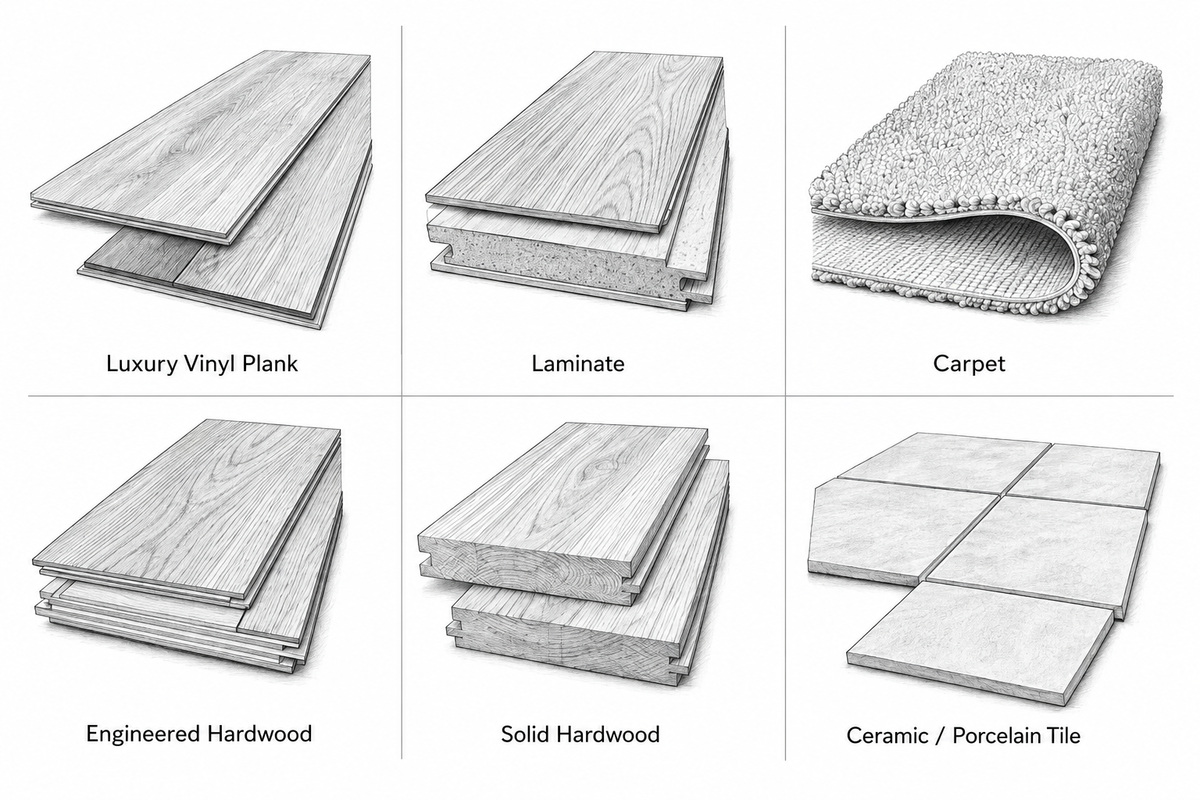
Each material below has a real place in a home — the right choice depends on the room and what matters most to you.
Luxury Vinyl Plank (LVP)
LVP has become one of the most popular flooring choices in the country because it combines a realistic wood or stone look with genuine water resistance and durability. It is constructed from multiple layers, including a rigid or flexible core and a printed design layer topped with a protective wear layer.
The advantages are real: LVP is fully waterproof in most constructions, making it suitable for kitchens, bathrooms, and basements where hardwood and laminate cannot go. It is also scratch- and dent-resistant, comfortable underfoot, and significantly easier to install than most other flooring types, which keeps labor cost down.
The tradeoff is resale perception. Some buyers and appraisers still value real hardwood more highly than LVP, even when the LVP performs better in wet-prone rooms. LVP is also not refinishable — when the wear layer is gone, the plank needs to be replaced rather than sanded down. For homeowners weighing LVP directly against laminate, the LVP vs. laminate comparison covers the real technical differences — including where each material's water resistance actually lives — in more detail.
Laminate
Laminate flooring uses a photographic image layer topped with a hard, clear wear layer over a composite wood core. It delivers a wood or stone appearance at one of the lowest price points in the flooring category.
Laminate holds up well to foot traffic and is easy to clean, and modern water-resistant laminate lines have closed much of the durability gap with LVP. Where laminate still falls short is standing water — even water-resistant laminate can swell at the seams if moisture sits on it for an extended period, which makes it a weaker choice than LVP for bathrooms and laundry rooms.
Laminate is a strong pick for bedrooms, living rooms, and hallways where budget matters and the flooring needs to look good without the premium price of hardwood.
Installation is one of laminate's real selling points — most systems click together without nails or adhesive, though getting the subfloor prep and layout right still makes a real difference in how long the floor lasts. For homeowners deciding between laminate and hardwood specifically, the laminate vs. hardwood comparison covers durability, cost, and resale value tradeoffs round by round.
Block: Projects Collection
Flooring
Carpet
Carpet remains the standard choice for bedrooms and family rooms where comfort and sound absorption matter more than water resistance or long-term durability. It is the softest option underfoot, the best at reducing noise between floors, and typically the least expensive material to purchase, though installation and padding add to the total.
The downsides are durability and maintenance. Carpet shows wear in high-traffic areas faster than hard flooring, stains are a real risk, and it requires more frequent cleaning to stay allergen-free. Carpet is also the shortest-lived of the common flooring materials, particularly in homes with pets or children.
Carpet still makes sense in bedrooms and formal living spaces where the tradeoffs are less of a concern and the comfort factor is a genuine benefit.
Engineered and Solid Hardwood
Hardwood remains the flooring most associated with home value and long-term appeal. Solid hardwood is a single piece of wood milled to a plank profile; engineered hardwood is a thin real-wood veneer over a plywood or composite core, which makes it more dimensionally stable and suitable for installation over concrete or in basements where solid hardwood cannot go.
The appeal of hardwood is longevity and resale value — a well-maintained hardwood floor can be sanded and refinished multiple times over decades rather than replaced, and it consistently ranks among the flooring types buyers value most.
The tradeoffs are cost, moisture sensitivity, and maintenance. Hardwood is not appropriate for bathrooms or below-grade rooms with any moisture risk, and it requires more careful cleaning than vinyl or laminate. It is also the most expensive common option, particularly in solid form.
Ceramic and Porcelain Tile
Tile is the most water-resistant flooring option on this list and the standard choice for bathrooms, kitchens, and entryways. Porcelain is denser and less porous than ceramic, making it slightly more durable and better suited to high-moisture or high-traffic areas, though both perform well for residential use.
Tile is essentially immune to water damage when properly installed and grouted, and it holds up to decades of use without significant wear. It is also cold and hard underfoot, which is a real comfort tradeoff in rooms where people stand for extended periods, and grout lines require periodic sealing and cleaning to prevent staining.
Tile costs more to install than most other options because of the labor involved in cutting, setting, and grouting, and cut complexity (patterns, large-format tile, mosaic accents) adds further to the labor bill. The guide to tile installation cost breaks down pricing by tile type, pattern complexity, and grout choice in more detail.
Two related projects fall outside this comparison but come up often in the same renovation. None of the five materials above belong on a garage floor — garage floor epoxy coating is the standard solution there instead. And for outdoor decks, composite decking has its own separate cost structure worth understanding on its own terms.
Best Flooring by Room or Use Case
The right material depends heavily on where it is going and how that room gets used day to day.
Room / Use Case | Best Options | Why |
|---|---|---|
Kitchen | Tile, LVP | Water resistance and durability under spills and foot traffic — the guide to the best kitchen flooring ranks all five materials specifically for kitchen use |
Bathroom | Tile, LVP | Full water resistance is non-negotiable in wet rooms — the guide to bathroom flooring covers material options and waterproofing specifically for this room |
Basement | LVP, Engineered Hardwood, Tile | Moisture resistance and stability over concrete slabs |
Bedrooms | Carpet, Hardwood, LVP | Comfort and quiet matter more than water resistance |
Living / Family Room | Hardwood, LVP, Laminate | High-visibility area where appearance and durability both matter |
Entryway / Mudroom | Tile, LVP | Heavy foot traffic and exposure to moisture, dirt, and salt |
How to Choose Between Flooring Options
Once the room-by-room fit is clear, the decision usually comes down to which priority matters most for your budget and lifestyle.
If budget is the top priority: laminate and carpet offer the lowest entry cost per square foot, with laminate holding up better over time in most homes.
If water resistance is the top priority: LVP and tile are the only two materials on this list built for wet or below-grade rooms without added risk.
If resale value is the top priority: hardwood consistently returns the most value at sale, followed by tile in kitchens and bathrooms and quality LVP elsewhere.
If comfort underfoot is the top priority: carpet wins for softness and warmth, with cork or cushioned LVP underlayment as a middle ground for hard-surface rooms.
If low maintenance is the top priority: LVP and tile both require the least ongoing care, while carpet requires the most. Learn more about LVP flooring cost of installation.
What to Look for in a Flooring Contractor
The material matters, but installation quality determines whether that material performs the way it is supposed to. A high-end floor installed over an unprepared subfloor will fail early regardless of what you paid for the material.
Confirm the contractor is licensed and insured, and ask specifically whether they handle subfloor inspection and repair themselves or subcontract it. Subfloor problems discovered mid-installation are a common source of cost overruns and delays.
Ask about manufacturer certification for the specific product line you are installing, particularly for LVP and engineered hardwood, where many manufacturers require certified installation to keep the product warranty valid.
Understand both warranties before signing anything: the manufacturer's product warranty covers defects in the material, while the contractor's labor warranty covers installation errors. These are separate and both matter.
Get at least three itemized quotes and compare them on the same terms — material grade, underlayment, removal of the old floor, and subfloor prep should all be broken out separately so you are comparing apples to apples rather than a low number that is missing scope the other quotes included.
Final Thoughts
There is no single best flooring material — there is only the best material for a specific room, budget, and household. LVP and tile earn their place in wet or high-traffic areas. Hardwood earns its premium in the rooms where long-term value and appearance matter most. Laminate and carpet remain the practical choices when budget or comfort is the deciding factor.
The homeowners who end up happiest with their flooring are the ones who match the material to the room instead of picking one finish for the whole house. Working through the comparisons above before getting quotes puts you in a much stronger position once a contractor is standing in your kitchen with a tape measure.
When you are ready to get estimates from licensed flooring contractors in your area, Home Upgrade Pros connects you with professionals who offer free, no-obligation assessments.
Flooring Projects from Our Experts

Aug
21
What's the Best Flooring for a Kitchen? A Contractor's Ranking
Best Kitchen Flooring: A Contractor's Real RankingJared Candelaria, owner of Tile Liquidators Floor & Design in...

Aug
17
LVP vs. Laminate: What's Actually the Difference?
LVP vs. Laminate Flooring: What Actually MattersVictor Topala, founder of Atlas Flooring & Design in Raleigh, North...
Flooring Ideas and Inspiration

Aug
21
How Much Does Cork Flooring Really Cost?
Cork Flooring Cost: What Homeowners Pay in 2026Cork flooring occupies a genuinely different niche than the other materials on...

Aug
17
How Much Does Tile Flooring Installation Really Cost?
Tile Installation Cost: What Homeowners Pay in 2026Tile is the flooring material homeowners reach for when water resistance and...